Call us now:

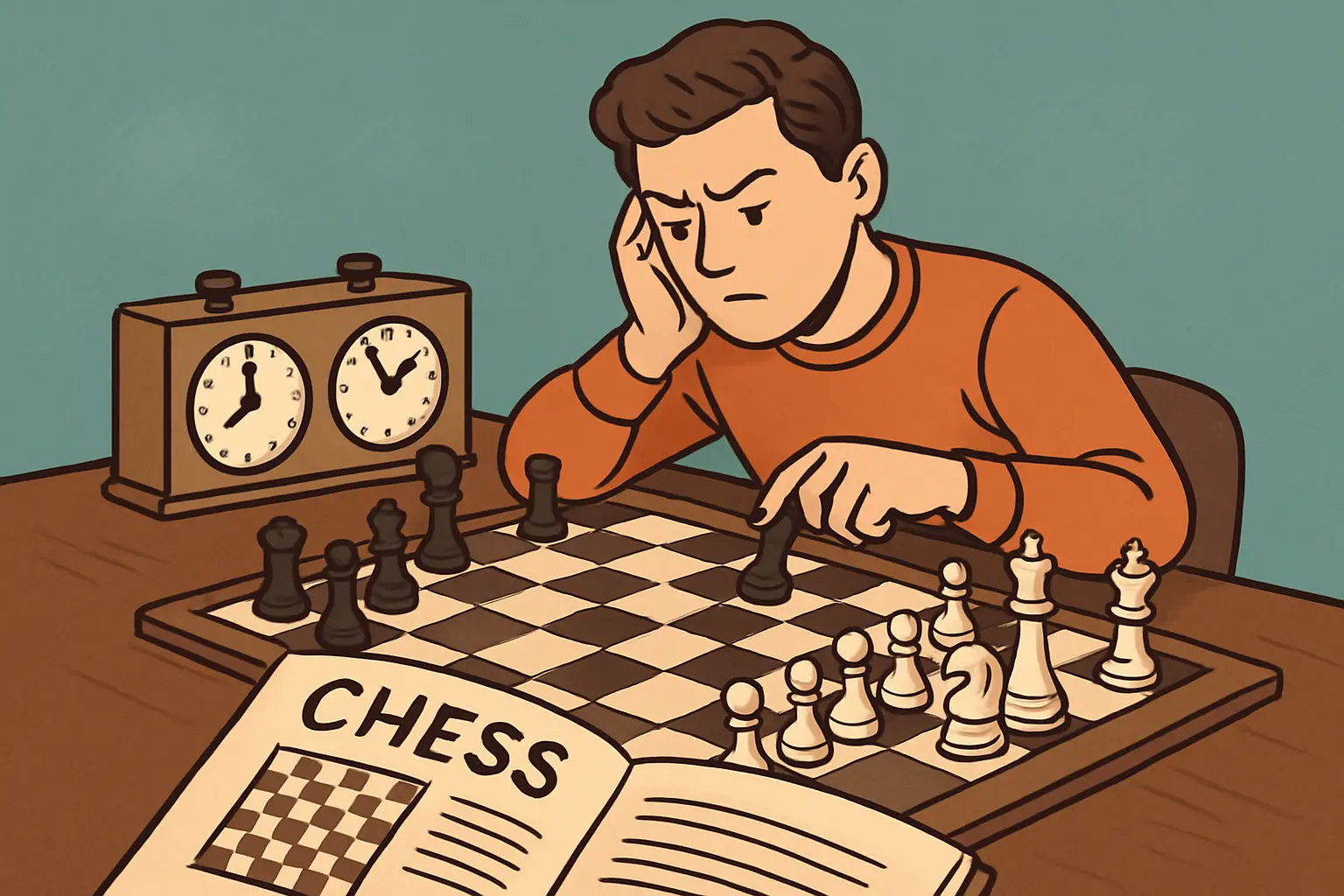
I’ve spent a lifetime at the chessboard—behind the pieces, behind a clock, and behind an arbiter’s table settling disputes. I’ve taught kids who believe knights fly, calmed grandmasters who swear threefold repetition has happened “five times already,” and filled margins of scoresheets with tiny diagrams to remember complex claims. This guide distills what matters: the official rules of chess as they’re applied in modern FIDE and US Chess play, the practical realities you face in tournaments and online games, and the little edge cases that separate casual familiarity from genuine mastery.
If you’re searching for the rules of chess, how to play chess from scratch, or a reliable reference for special moves, draw procedures, and clock etiquette, you’re in the right place. I’ll keep this faithful to the Laws while staying grounded in the way real games unfold.
What you’ll learn and use immediately
- Chess setup and board orientation (white on right), plus how every piece moves
- Special moves explained clearly: castling, en passant, and pawn promotion
- The difference between check, checkmate, stalemate, and perpetual check
- Draw rules: 50‑move, 75‑move, threefold and fivefold repetition, dead positions
- How to claim a draw properly—step by step with no gotchas
- Tournament specifics: touch‑move, illegal move penalties, clocks, notation
- Time controls explained (90+30, 5+0, 3+2) with increments vs delays
- Online play nuances: premove, auto‑claim, disconnects, insufficient time
- Common beginner pitfalls and how to fix them fast
Let’s set the board.
The Chessboard and Proper Chess Setup (White on Right)
Set your chessboard so that the lower‑right square is a light square—remember “white on right.” Orientation sets coordinates and castling rights correctly and prevents disputes.
- Files (columns) are labeled a through h from White’s left to right.
- Ranks (rows) are numbered 1 through 8 from White’s side to Black’s.
- The bottom‑left square from White’s perspective is a1 (dark square), and the top‑right from Black’s perspective is h8 (dark square).
How to set up the pieces:
- Rooks go in the corners (a1, h1 for White; a8, h8 for Black).
- Knights next to rooks (b1, g1; b8, g8).
- Bishops next (c1, f1; c8, f8).
- Queens on their own color (White queen on d1, Black queen on d8).
- Kings on the remaining squares (e1, e8).
- Pawns fill the second rank for White (a2–h2) and seventh rank for Black (a7–h7).
I still see strong club players reverse their king and queen out of habit in blitz. Don’t. The queen on her color is a foundational memory tool.
Chess Piece Names and How They Move
Basic principle: You may move one piece per turn to an empty square, or capture an enemy piece on its square, as long as you don’t leave your own king in check. There are exceptions (special moves) that I’ll detail later.
- King (K): Moves one square in any direction. It cannot move into check and cannot remain in check. The king is never captured; the game ends if your opponent can checkmate your king.
- Queen (Q): Moves any number of squares along rank, file, or diagonal.
- Rook (R): Moves any number of squares horizontally or vertically.
- Bishop (B): Moves any number of squares diagonally. One bishop lives on dark squares, the other on light.
- Knight (N): Moves in an L‑shape: two squares in one direction and one square perpendicular. Knights jump over pieces.
- Pawn (P): Moves forward—one square; from its starting square it may move two squares. Pawns capture one square diagonally forward. Pawns never move backward.
Pawn truth that will save you from endless arguments:
• Can a pawn move backwards? No. Never.
• Can a pawn capture straight ahead? No. Only diagonally forward.
• Can a pawn move two squares from anywhere? Only from its starting rank (second rank for White, seventh rank for Black).
Checks, Checkmate, and Stalemate: The End Conditions That Matter
- Check: Your king is attacked. You must get out of check immediately by moving the king, blocking, or capturing the attacking piece.
- Double check: Two pieces give check at once. Only a king move can get you out—blocking or capturing one attacker is never enough.
- Checkmate: Your king is in check and no legal move gets you out. That’s the end of the game.
- Stalemate: You are not in check, but you have no legal move. That’s a draw.
Do you have to say “check”? No. In both over‑the‑board and online play, announcing check is optional and, in serious tournaments, discouraged to avoid distracting opponents.
How Chess Starts: Who Moves First and How Games Flow
- White always makes the first move. Players alternate moves thereafter.
- A move is considered complete when you release your piece on a legal square and, in matches using a clock, press your clock.
- You win by checkmating your opponent’s king or if your opponent resigns.
- You draw by agreement, stalemate, certain repetitions or move counts, or when checkmate is impossible.
Special Moves That Define Modern Chess
Castling Rules: The King’s Only Leap
Definition: Castling is a one‑move king‑and‑rook maneuver that improves king safety and rook activity. You may castle kingside (short) or queenside (long).
- Kingside castling (O‑O): King moves e1 to g1 (for White), rook h1 to f1. Mirror for Black.
- Queenside castling (O‑O‑O): King moves e1 to c1, rook a1 to d1. Mirror for Black.
You can castle only if all the following are true:
- Neither the king nor the involved rook has moved earlier in the game.
- There are no pieces between the king and rook.
- The king is not in check.
- The squares the king crosses and the destination square are not attacked by any enemy piece.
Castling truths I enforce every weekend at tournaments:
• Can you castle out of check? No.
• Can you castle through check? No.
• Can you castle if your rook is under attack? Yes—the rook being attacked is irrelevant.
• Can you castle after moving the rook or king earlier, even if they moved back? No.
Real board lesson: If you touch your king with the intent to castle and it turns out castling is illegal, you must make a legal king move instead. Touch‑move applies to castling too.
En Passant Rules: The Pawn Capture That Everyone Argues About
Definition: En passant is a special pawn capture where a pawn that advances two squares from its starting rank can be captured as if it had moved one square, but only on the very next move.
En passant essentials:
- It is only legal on the move immediately following the opponent’s two‑square pawn advance past your pawn’s attack square.
- If you wait even one move, the right to capture en passant is gone forever.
- You cannot use en passant to get out of check if the capture still leaves your king in check.
- En passant is optional. If you don’t want to capture, you’re free to skip it.
In practical play, en passant reveals if someone truly knows the rules. Say in your head: “Right now or never.”
Pawn Promotion Rules: Queening, Underpromotion, and Multiples
Definition: When your pawn reaches the farthest rank, it must promote to a queen, rook, bishop, or knight of your color. This happens immediately on that same move.
- You may promote to a queen even if your original queen is still on the board.
- Underpromotion is fully legal and sometimes best—especially to a knight for a mating fork or to avoid stalemate.
- Place the new piece on the promotion square and remove the pawn. If a proper piece is not available, stop the clock and summon an arbiter.
Double Check and Discovered Check: Power Tactics with Rule Implications
Discovered check happens when you move a piece and uncover a line attack on the enemy king. Double check occurs when your moved piece also gives check while uncovering another check. In double check, the only legal response is to move the king.
Check, Checkmate, Stalemate, and Perpetual Check—With Precision
Perpetual check is an informal term for a sequence of checks that forces threefold repetition. Under the rules, it’s typically handled as a draw by repetition.
Draw Rules and Repetition: From Claims to Automatic Outcomes
Chess has two categories of draw outcomes: claims you can make and automatic draws the arbiter should enforce when conditions appear.
- Fifty‑move rule (claim): A player may claim a draw if no pawn move or capture has occurred in the last fifty consecutive moves by each side.
- Threefold repetition (claim): A player may claim a draw if the same position, with the same player to move and the same rights, has occurred three times.
- Seventy‑five‑move rule (automatic): If no pawn move or capture has occurred in the last seventy‑five moves by each side, the game is automatically drawn.
- Fivefold repetition (automatic): If a position occurs five times with the same player to move and the same rights, the game is automatically drawn.
- Dead position (automatic): If no legal series of moves can ever lead to checkmate, the game is drawn immediately.
Insufficient mating material (typical dead positions):
- King vs king
- King and bishop vs king
- King and knight vs king
- King and bishop vs king and bishop when both bishops move on the same color squares
- King and two knights vs king cannot force mate without help; if the defender’s time falls, it’s still a draw if the attacker cannot possibly mate.
How to Claim a Draw Properly (Threefold and Fifty‑Move)
For threefold repetition:
- Do not make the repeating move on the board. Instead, write the intended move on your scoresheet.
- Stop both clocks. Summon the arbiter.
- State the claim and show the arbiter the relevant positions on the scoresheet.
- If the claim is correct, the game is drawn. If not, you may be required to play the intended move and the game continues.
For the fifty‑move rule:
- Verify that the last fifty consecutive moves by each side included no pawn moves and no captures.
- Stop both clocks. Summon the arbiter.
- State: “I claim a draw by the fifty‑move rule.” Show the arbiter the scoresheets for verification.
Draw Rules Summary
| Draw Rule | Claim or Automatic | Key Condition |
|---|---|---|
| Stalemate | Automatic | Side to move has no legal move; king not in check |
| Threefold repetition | Claim | Same position with same player to move occurs three times |
| Fivefold repetition | Automatic | Position occurs five times |
| Fifty‑move rule | Claim | 50 moves each side without pawn move or capture |
| Seventy‑five‑move rule | Automatic | 75 moves each side without pawn move or capture |
Time Forfeit and Insufficient Material
If a player’s time runs out, that player loses—unless the opponent does not have mating material or mating possibility. “Mating possibility” means that with some legal sequence of moves a checkmate could theoretically occur.
- Your flag falls with only king and bishop; opponent has a king: draw.
- Your flag falls with only king and two knights; opponent has a king: draw.
- Your flag falls with king and rook; opponent has king: loss (mate possible).
Tournament Rules and Etiquette That Decide Real Games
Touch‑Move Rule and “J’adoube”
Touch‑move: If you deliberately touch one of your own pieces, you must move it if a legal move exists. If you deliberately touch an opponent’s piece, you must capture it if legal. If you wish to adjust a piece on its square without intending to move it, say “j’adoube” (or “I adjust”) before touching.
Illegal Moves: Penalties and Practical Handling
An illegal move is one that leaves your king in check, moves a piece in a way not allowed by the rules, or places a piece on an illegal square. Pressing your clock after an illegal move makes it “completed” in timekeeping terms, but the move must be corrected.
Under modern FIDE rules:
• First illegal move by a player: typically a time penalty is given to the opponent (commonly two minutes are added).
• Second illegal move by the same player: loss of the game.
What happens after an illegal move
- Stop the clock.
- Summon the arbiter.
- The position is restored to the last legal position.
- The player must make a legal move; penalties are applied as per event rules.
Chess Clock Rules: Time Controls, Flag Fall, and Behavior
- After making a move, press your clock with the same hand used to move the piece.
- If your time expires, you lose if the opponent has mating possibility.
- Stop the clock only to call the arbiter for legitimate reasons (draw claim, illegal move, equipment failure).
- Hitting the clock before completing the move is illegal.
Time Controls and What They Mean
- Classical: Longer time controls (e.g., 90+30).
- Rapid: Shorter but still thoughtful (e.g., 15+10).
- Blitz: Fast and fun (e.g., 5+0, 3+2).
- Bullet: Hyper‑fast (e.g., 1+0, 1+1).
Increment vs Delay—And Why It Matters
Increment adds time after each move; delay waits before subtracting time. Increment replenishes seconds each move; delay gives a short free window per move. Increment is the FIDE standard; delay is common in US Chess events.
How to Write Chess Moves (Algebraic Notation Essentials)
- Files a–h; ranks 1–8.
- Piece letters: K, Q, R, B, N. Pawns have no letter.
- Examples: e4, Nf3, exd5, Qe8+, Qe8#.
- Castling: O‑O (kingside), O‑O‑O (queenside).
- Promotion: e8=Q.
- Result: 1‑0, 0‑1, ½‑½.
FIDE vs US Chess: Key Differences Players Actually Feel
The rules are harmonized more than ever, but experiences still differ on time controls, illegal move penalties, and notation practices. Always check your event’s specific regulations.
Etiquette That Makes You Welcome at Any Board
- Keep quiet; analyze away from the board.
- Offer a draw only on your own time and only once in a reasonable position.
- Use the restroom or get water on your time.
- Shake hands or nod at the start and end—follow the event’s convention.
Online Chess Rules and Realities You Should Expect
Online chess plays by the same Laws but layers in platform logic: premove, auto‑claims, takebacks, and server‑specific timeout behavior. Know your platform’s rules before relying on auto‑claims.
Beginner Essentials: Common Mistakes You Can Fix Today
- Board setup mistakes: forgetting “white on right”; swapping king and queen.
- Movement mistakes: trying to move a pawn backward; moving a bishop straight.
- Practical fixes: confirm a1 is dark; before castling, trace the king’s path; for en passant, act immediately.
People‑Also‑Ask Answers—Straight and Clean
- Can a pawn move backwards? No.
- Can you capture en passant after waiting a move? No.
- Can you castle after check? You cannot castle while in check.
- Is stalemate a win? No. It’s a draw.
- Do you have to say check? No.
Strategy Meets Rules: How the Laws Shape Practical Play
The rules influence endgame technique, opening decisions (preserve castling rights), and tournament management. Knowing when to claim, when to stop the clock, and how to avoid illegal moves are practical skills that win points.
Edge Cases You’ll Be Glad You Knew
- A pinned piece still attacks squares for the purpose of castling legality.
- Promotion immediately ends the pawn’s life—place the new piece on the square.
- Knocked‑over pieces should be reset by the player on their own time; call an arbiter if disputed.
Illegal Moves and Penalties—FIDE vs US Chess Snapshot
| Situation | FIDE Typical Handling | US Chess Typical Handling |
|---|---|---|
| First illegal move (standard/rapid) | Add time to opponent; restore position | Similar; TD discretion |
| Second illegal move by same player | Loss of game | Loss of game |
Practical Decision Trees—Without the Diagrams
Can I castle here? Check that king and rook haven’t moved, path is clear, king is not in check, and the path squares are not attacked.
Teaching and Training Ideas That Lock in the Rules
- Endgame drills: bishop and knight vs king; rook vs king.
- En passant spotting: note when it’s possible every game this week.
- Castling safety checks: habitually scan the king’s path before castling.
Common Illegal Moves Beginners Make—and How to Avoid Them
- Moving the king into check: ask “Is that destination square attacked?”
- Castling with pieces between the king and rook: clear the path first.
- Forgetting en passant is time‑sensitive: capture now or never.
Online vs Over‑the‑Board Mindset
Online premove and auto‑claims change behavior. OTB you must press your clock. Know the platform or event rules you’re playing under.
A Quick Glossary You’ll Actually Use
- Algebraic notation: Standardized system for recording moves.
- Arbiter/TD: The official who enforces rules.
- Buchholz/Sonneborn‑Berger: Tie‑break systems based on opponents’ scores.
- J’adoube: “I adjust”—phrase to adjust a piece without moving it.
Case Studies from Real Boards
- The touch‑move blunder: A junior touched his rook and was obliged to move it; lesson—keep your hands off pieces until decided.
- The threefold “almost” claim: A master missed en passant rights in previous occurrences; details matter.
- The 75‑move rescuer: A defender reached a 75‑move automatic draw in a queen vs rook endgame by avoiding pawn moves and captures.
Frequently Misunderstood Positions and Their Rulings
- Two knights vs king: Two knights cannot force mate against a bare king; flag fall in such cases is a draw.
- Bishop vs bishop (same color): Neither side can force mate without pawns—dead position.
- Fortresses: If no pawn move or capture occurs, 50/75‑move rules become decisive.
Endgame Tablebase Lore—What Rules They Intersect With
Tablebases can prove mate in N moves, but the 50‑move counter still exists. If mate requires more than 50 moves without a pawn move or capture, the defender can claim a draw.
Chess Rules for Kids—Gentle Framing Without Dumbing Down
- Kings are slow, queens are fast, knights jump.
- Special gifts: en passant and castling—teach them as “fun rules.”
- Behavior: Be kind, be quiet, press the clock gently.
Chess Rules Poster Essentials (Condensed)
White on right • Queen on her color • King moves one • Queen many • Rooks straight • Bishops diagonal • Knights jump • Pawns march and capture differently • Castle rules • En passant: capture “as if” right away • Promote on last rank • Checkmate ends game • Threefold and 50‑move claims; fivefold and 75‑move automatic • Touch‑move and j’adoube • Record moves and respect the clock.
Closing Thoughts: The Spirit Behind the Laws
The rules of chess aren’t bureaucracy—they’re the skeleton of a living game. Master the rules not as trivia but as tools. You’ll save half‑points, win full points you once let slip, and carry yourself like a professional whether you’re playing your first scholastic event or a packed open in a hotel ballroom.
Set the board with white on right—and let the Laws speak through your hands.